
Ever since I got accepted to the University of St Andrews for a dual honours degree in BSc Computer Science & Psychology, people around me always give me a weird look. They ask me with genuine confusion: "How do these two 'totally different' majors even combine?"
To most, one is about silicon circuits, decoding errors, and developing applications, while the other is about human behavior, mental processes, and emotions. But to me, studying computer science alongside psychology isn't a random pairing. It is the study of two different kinds of minds: the human mind and the mind of computer systems.
My Roots: From Peer Counselling to Building Self-Help Tools
My passion for this intersection traces back to my secondary school days where I served as the president of the Peer Counselling Unit. During that time, I realized firsthand how pervasive mental health stigma is—especially among teenagers and traditional Asian families. In my home country, Malaysia, adults often misinterpret mental health struggles as a "phase" or an "excuse," forcing young people to suffer in silence due to Allodoxaphobia—the persistent fear of being judged by others.
When the pandemic hit and forced us into the movement control order, I noticed a dramatic shift: while face-to-face interactions felt intimidating, teenagers and Gen Z were remarkably comfortable expressing themselves through digital chat and messaging platforms.

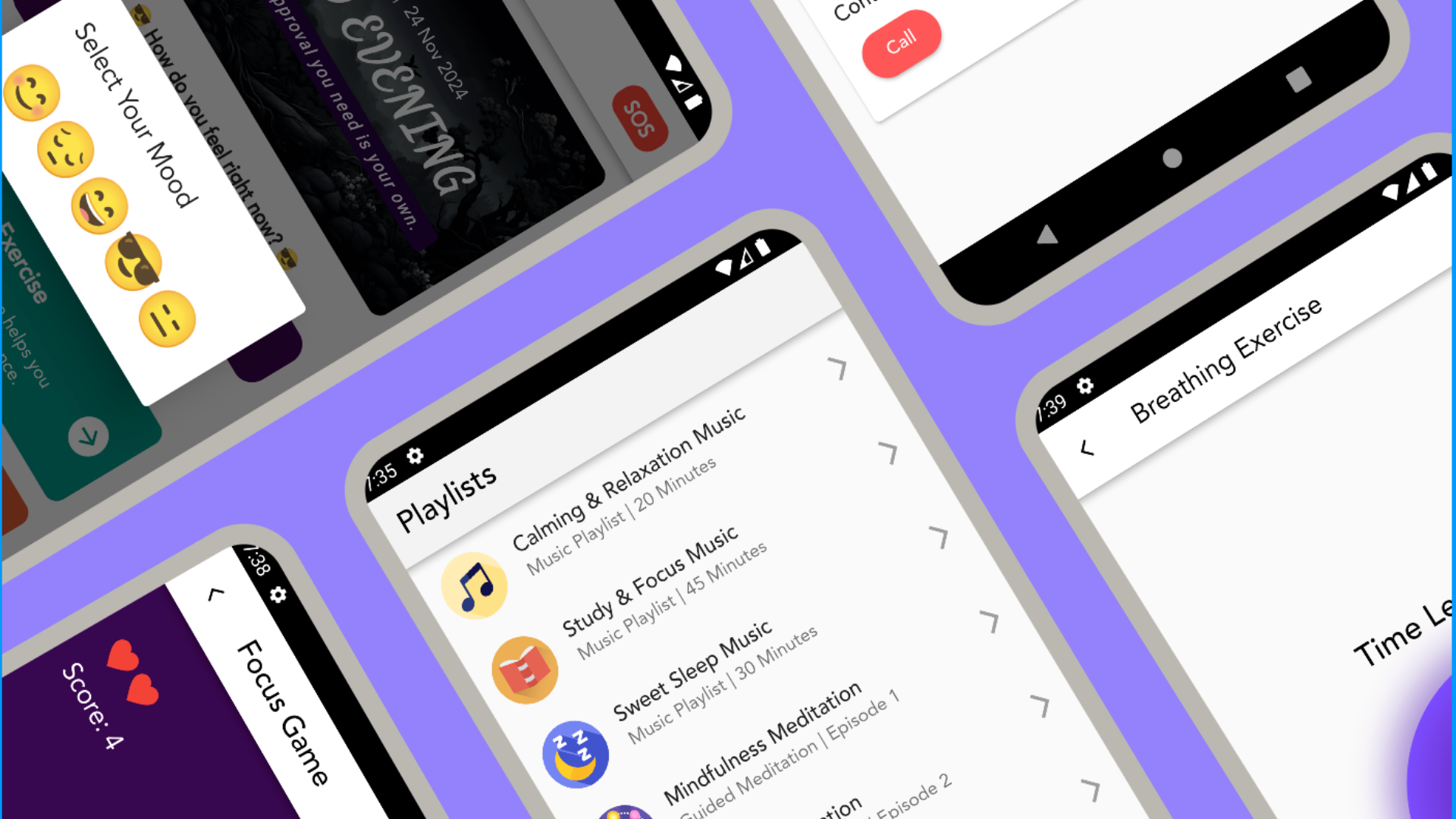
This insight inspired me to bridge technology and empathy by creating Touch 'n Grow—an app designed to offer an accessible, safe, and comfortable digital space for youth mental support.
"Studying Psychology and Computer Science allows us to build programs that complement human beings rather than replace them. Technology should act as an amplifier for human capability, not a substitute for human warmth."
Writing Code for Humans, Not Just Computers
The most obvious reason these fields align is that code does not exist in a vacuum. When developers write software, it almost always interacts directly with a human user—typically through a Graphical User Interface (GUI).
A developer can write mathematically perfect algorithms, but if the interface fails to account for human perception, visual fatigue, or cognitive load, the product ultimately fails. To build software that people truly enjoy using, engineers must understand psychological principles.

- Visual Perception: What color palettes reduce cognitive fatigue and maintain focus without straining human vision?
- Interaction Architecture: Do users feel more in control with event-driven interfaces or predictable polling approaches?
- Attention & Dopamine: Do constant push notifications increase product engagement, or do they trigger anxiety and user burnout?
These are fundamentally psychological questions solved inside the world of software development. Even when building technical tools *for* developers—such as designing an Integrated Development Environment (IDE)—understanding cognitive processing helps create virtual environments that reduce mental friction and developer fatigue.
Leadership, Empathy, and Tech Management
Looking beyond source code, technical competence in industry frequently leads to leadership and management roles. Overseeing engineering teams requires far more than technical proficiency—it demands human empathy, active listening, and emotional intelligence.
A background in psychology arms tech leaders with the framework to understand team dynamics, motivation styles, stress management, and workplace behavior. In an era where Artificial Intelligence is transforming technical execution, the human element of technology leadership is more vital than ever.
Final Thoughts
Computer Science gives us the power to build incredible digital infrastructure, but Psychology reminds us *who* we are building it for. By combining both at St Andrews, my goal is to continue engineering software that respects human cognitive bounds, elevates mental well-being, and crafts a more empathetic technological future.